
Investing in Fractional Gold Coins – Pros and Cons
23/10/2023Daniel Fisher

Accumulate gold coins on a regular basis for home delivery or storage.
Let our experts hand-pick a gold investment portfolio for you.
Free & fully insured UK Delivery. Learn more

Secure & flexible payments. Learn more

Buyback Guarantee Learn more

A cost-effective way to buy silver bullion with off-shore storage
Let our experts hand-pick a silver investment portfolio for you.
Free & fully insured UK Delivery. Learn more
Secure & flexible payments. Learn more
Buyback Guarantee Learn more
Free & fully insured UK Delivery. Learn more
Secure & flexible payments. Learn more
Buyback Guarantee Learn more


Accumulate gold coins on a regular basis for home delivery or storage.
Let our experts hand-pick a gold investment portfolio for you.
A cost-effective way to buy silver bullion with off-shore storage
Let our experts hand-pick a silver investment portfolio for you.
Free & fully insured UK Delivery. Learn more
Secure & flexible payments. Learn more
Buyback Guarantee Learn more
Free & fully insured UK Delivery. Learn more
Secure & flexible payments. Learn more
Buyback Guarantee Learn more
The term fractional gold refers to gold coins containing less than one troy ounce of gold. Most major mints around the world produce smaller versions of their flagship one-ounce bullion coins, giving investors a choice of weights and price points.
The obvious exception is the Gold Sovereign. A full Sovereign contains 0.2354 troy ounces of pure gold, but because it is the standard size of a historic coin in its own right, it isn’t generally described as a fractional gold coin.
When we think about it, a tenth or quarter of an ounce seems like an awfully small amount of gold. So why would anyone want to invest in fractional gold? The answer is flexibility. Smaller coins can make gold more accessible, easier to buy regularly and easier to sell in smaller amounts.
But that flexibility comes at a price.
In this article, we look at the pros and cons of investing in fractional gold coins and whether they deserve a place in your gold portfolio.
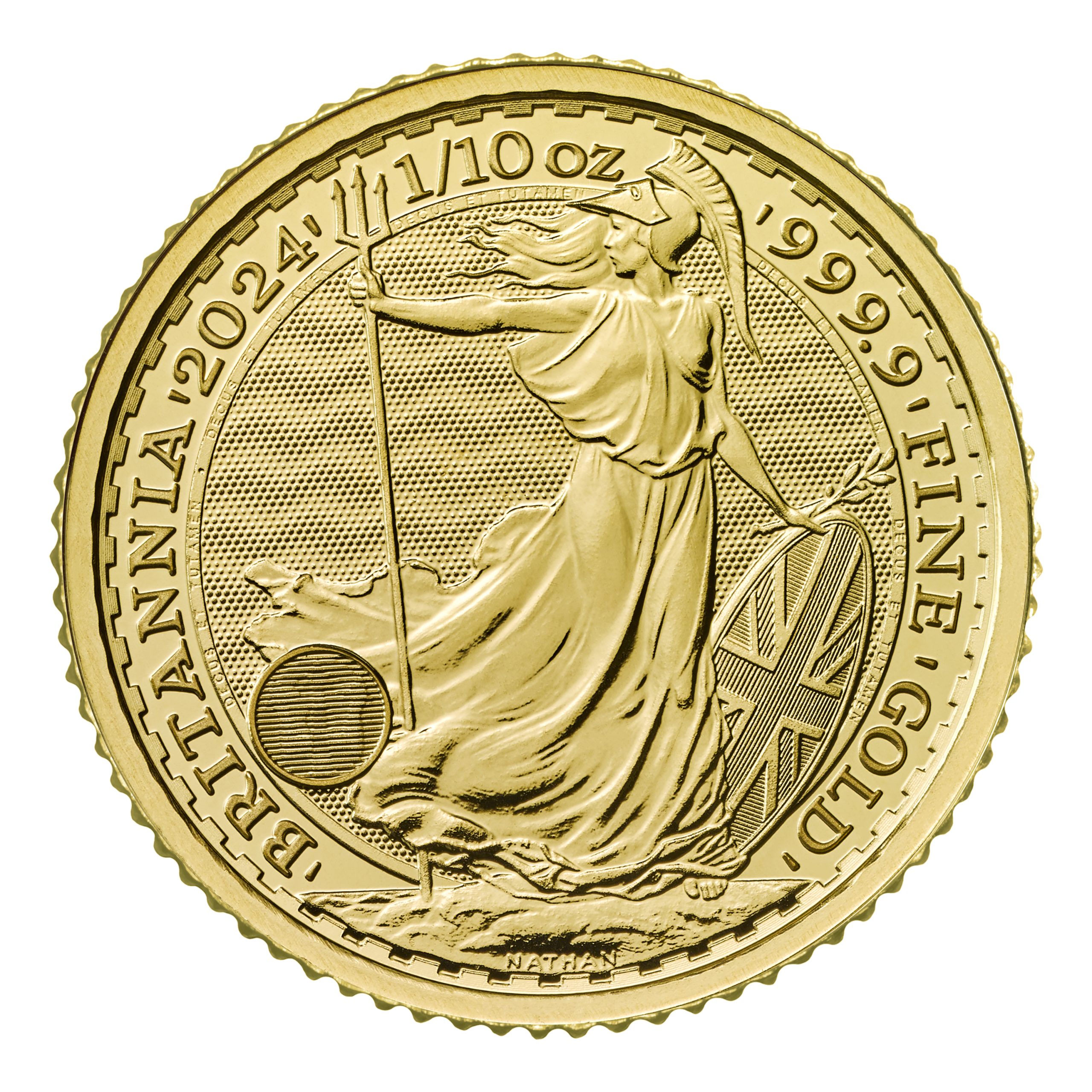
Most major precious metals mints produce fractional versions of their flagship one-ounce gold coins. Well-known examples include fractional Krugerrands, Canadian Maple Leafs, American Eagles and Austrian Philharmonics.
Alongside the 1oz version, coins are commonly available in half-ounce, quarter-ounce and tenth-ounce weights. Some mints have even produced tiny 1/20oz gold coins.
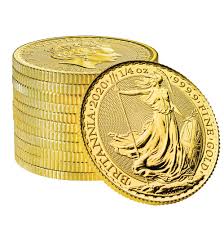
For UK investors, British fractional coins have an additional attraction. UK legal tender coins such as Britannias and Sovereigns are exempt from Capital Gains Tax for UK residents. Investment-grade gold is also VAT exempt.
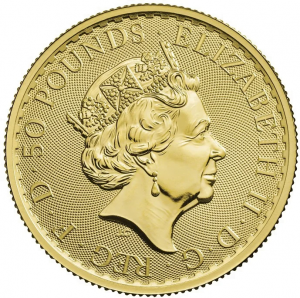
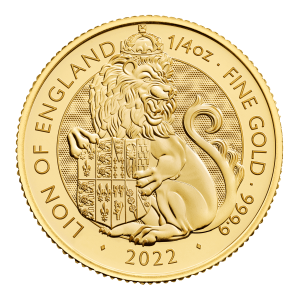
Popular fractional UK gold coins include:
It’s worth considering fractional gold coins for several reasons. Their smaller size appeals to investors who don’t necessarily want to commit the money required for a full one-ounce coin every time they buy gold.
They can also provide something particularly valuable when building a physical gold portfolio – divisibility.
The simplest advantage is, of course, price.
A tenth-ounce or quarter-ounce gold coin requires a much smaller initial outlay than a full one-ounce coin. If you’re starting a collection or building a gold portfolio gradually, you may not want to commit a large sum of money with every purchase.
Fractional gold coins allow investors to buy little and often rather than waiting until they have enough money for a 1oz coin.
This can also suit investors who prefer to spread their purchases over time rather than attempting to pick the perfect moment to buy gold.
One reason some investors favour fractional gold is the additional flexibility it provides.
Gold has traditionally been regarded as a store of value during periods of economic and currency uncertainty. Some buyers therefore like the idea of holding physical wealth in relatively small denominations.
In an extreme scenario where gold needed to be exchanged directly, a small fractional coin would clearly be more practical than attempting to exchange a much higher-value one-ounce coin.
We certainly wouldn’t suggest buying gold purely because you expect to barter with it. But the underlying advantage is very real – smaller units give you more control over how much of your gold you use or sell at any one time.
Free ultimate guide for keen gold investors
Building a collection from scratch can be an absorbing experience. Fractional coins allow you to own a wider variety of coins without committing the same amount of capital required to buy multiple one-ounce pieces.
Over the years, buying smaller coins regularly can build into a substantial physical gold holding.
For collectors, there’s also the enjoyment of owning different designs, denominations and releases rather than simply accumulating identical one-ounce coins.
This is perhaps the strongest investment argument for fractional gold.
Imagine you own ten 1oz gold coins and need to release a relatively small amount of cash. Your minimum sale is one entire ounce.
If the same value is spread across smaller coins, you have far more control over how much gold you sell.
Fractional coins can therefore provide useful liquidity without forcing you to dispose of a larger proportion of your holding than you actually need.
That flexibility can become increasingly valuable as the gold price rises.
As the gold price rises, the cost of buying a full one-ounce coin rises with it.
Fractional coins provide a lower entry point, allowing investors to continue adding physical gold to their portfolio without needing to commit the cost of a full ounce each time.
That doesn’t necessarily make fractional gold a better investment – you still need to consider the higher premium you pay for smaller coins – but it can make physical gold accessible to a wider range of buyers.
Many gold investors hold the metal partly as diversification against economic, financial and geopolitical uncertainty.
Fractional coins provide the same underlying exposure to physical gold as larger bullion coins, but with greater divisibility.
If you subsequently need to free up some capital, smaller coins enable you to sell part of your holding while leaving the remainder invested. You aren’t forced to liquidate an entire ounce simply because you need access to a smaller amount of money.

Many investors favour fractional coins for the additional divisibility they bring to a physical gold portfolio.
So why not simply buy all your gold in tenth-ounce coins?
Because the flexibility comes at a cost. For investors focused primarily on getting the maximum amount of gold for their money, larger coins will usually offer better value.
This is the biggest disadvantage of fractional gold.
It costs a mint money to manufacture, package and distribute a coin regardless of whether it contains one ounce or one tenth of an ounce of gold. Those costs therefore represent a much greater proportion of the value of a smaller coin.
As a result, a 1oz bullion coin will generally offer a lower gold coin premium – and therefore a better price per gram of gold – than the equivalent fractional versions.
That’s important because you shouldn’t assume you’ll recover the entire premium when you eventually sell.
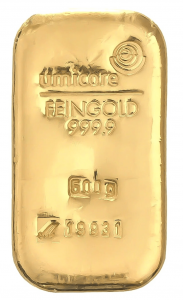
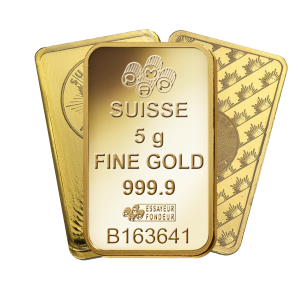
If your priority is simply to acquire as much physical gold as possible for your budget, larger bullion coins or gold bars will generally be more cost-efficient.
This may sound basic, but tiny coins really are easier to misplace than one-ounce coins.
Holding the same overall value in fractional gold also means owning a greater number of individual coins. That can require more organisation and potentially more storage space.
We recommend keeping smaller coins securely stored in their original packaging, capsules or suitable tubes wherever possible and handling them carefully to maintain their condition.
Fractional gold coins can be a very useful part of a physical gold portfolio, but they aren’t necessarily the cheapest way to buy gold.
Their main advantages are accessibility, divisibility and flexibility. You can invest smaller amounts at a time and, crucially, sell smaller amounts when you need to release capital.
Their main disadvantage is the higher premium per gram compared with larger bullion coins and bars.
For many investors, the answer isn’t necessarily choosing one or the other. A portfolio might contain larger one-ounce coins or bars for cost-efficient exposure to gold, alongside fractional coins to provide greater flexibility.
For UK investors, fractional Britannias and Sovereigns can be particularly attractive because qualifying investment gold is VAT exempt and UK legal tender coins are exempt from Capital Gains Tax for UK residents.

At Physical Gold, we’ve spent many years helping investors decide which combination of gold coins and bars best suits their objectives.
Sometimes fractional coins make perfect sense. In other circumstances, paying a little more to buy a larger coin can provide considerably better value per gram. It depends on your budget, how regularly you intend to buy and how much flexibility you want when you eventually come to sell.
Call us on 020 7060 9992 or get in touch with us online to discuss your plans with our team. We’re always happy to talk through the options – whether you’re buying your first fractional coin or adding to an established gold portfolio.

Share this post on:


Latest Posts:
Live Gold Spot Price in Sterling. Gold is one of the densest of all metals. It is a good conductor of heat and electricity. It is also soft and the most malleable and ductile of the elements; an ounce (31.1 grams; gold is weighed in troy ounces) can be beaten out to 187 square feet (about 17 square metres) in extremely thin sheets called gold leaf.
Live Silver Spot Price in Sterling. Silver (Ag), chemical element, a white lustrous metal valued for its decorative beauty and electrical conductivity. Silver is located in Group 11 (Ib) and Period 5 of the periodic table, between copper (Period 4) and gold (Period 6), and its physical and chemical properties are intermediate between those two metals.